

Conveyor pipes for closed-system bulk material transport
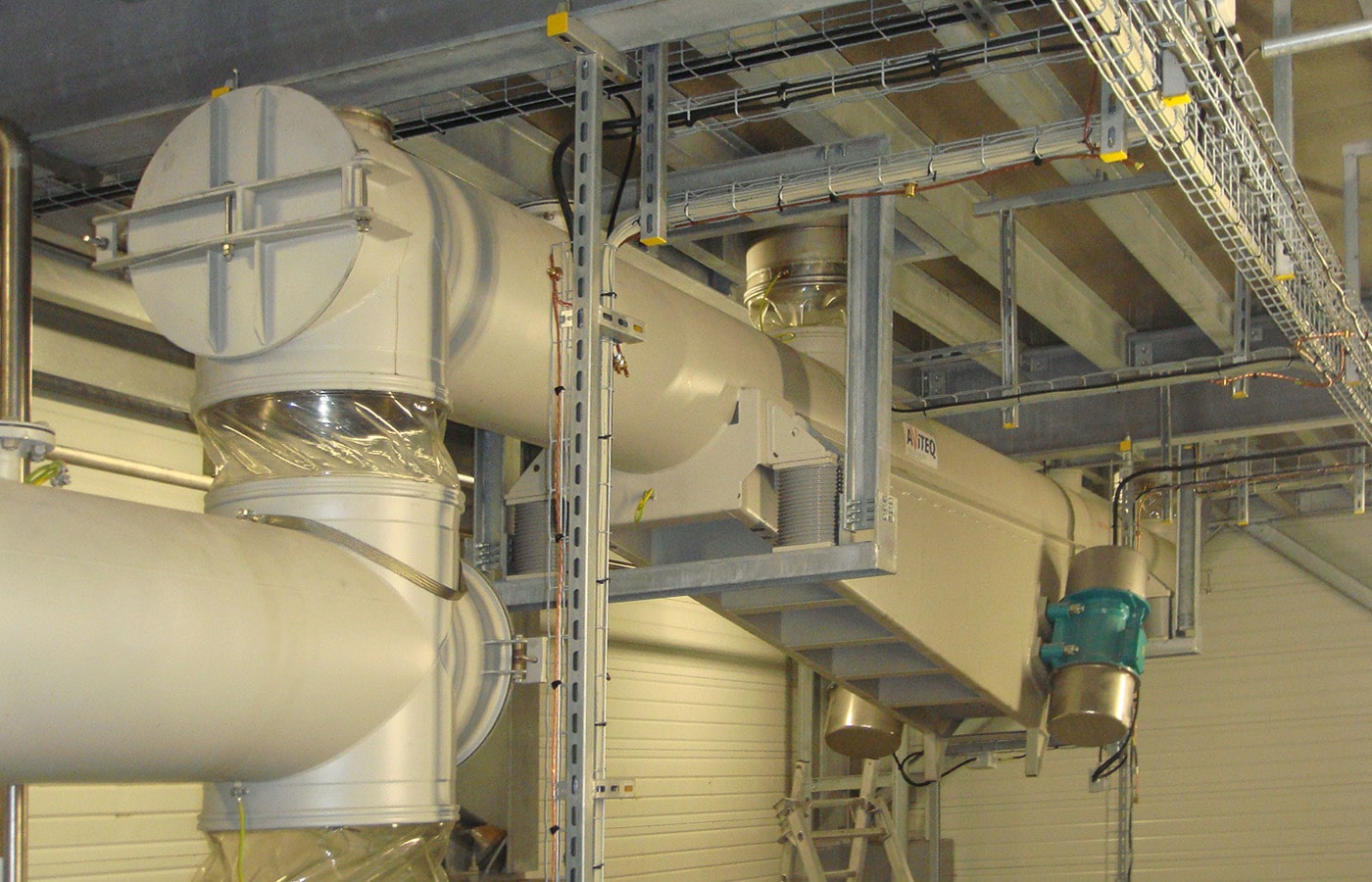
AViTEQ Conveyor tubes transport free-flowing bulk materials horizontally in a closed system. The vibrations of the conveyor tube move the material along the conveying path. This allows for the controlled and dust-tight conveyance of bulk materials, even when high standards of cleanliness and hygiene are required.
What is a delivery pipe, and how does it work?
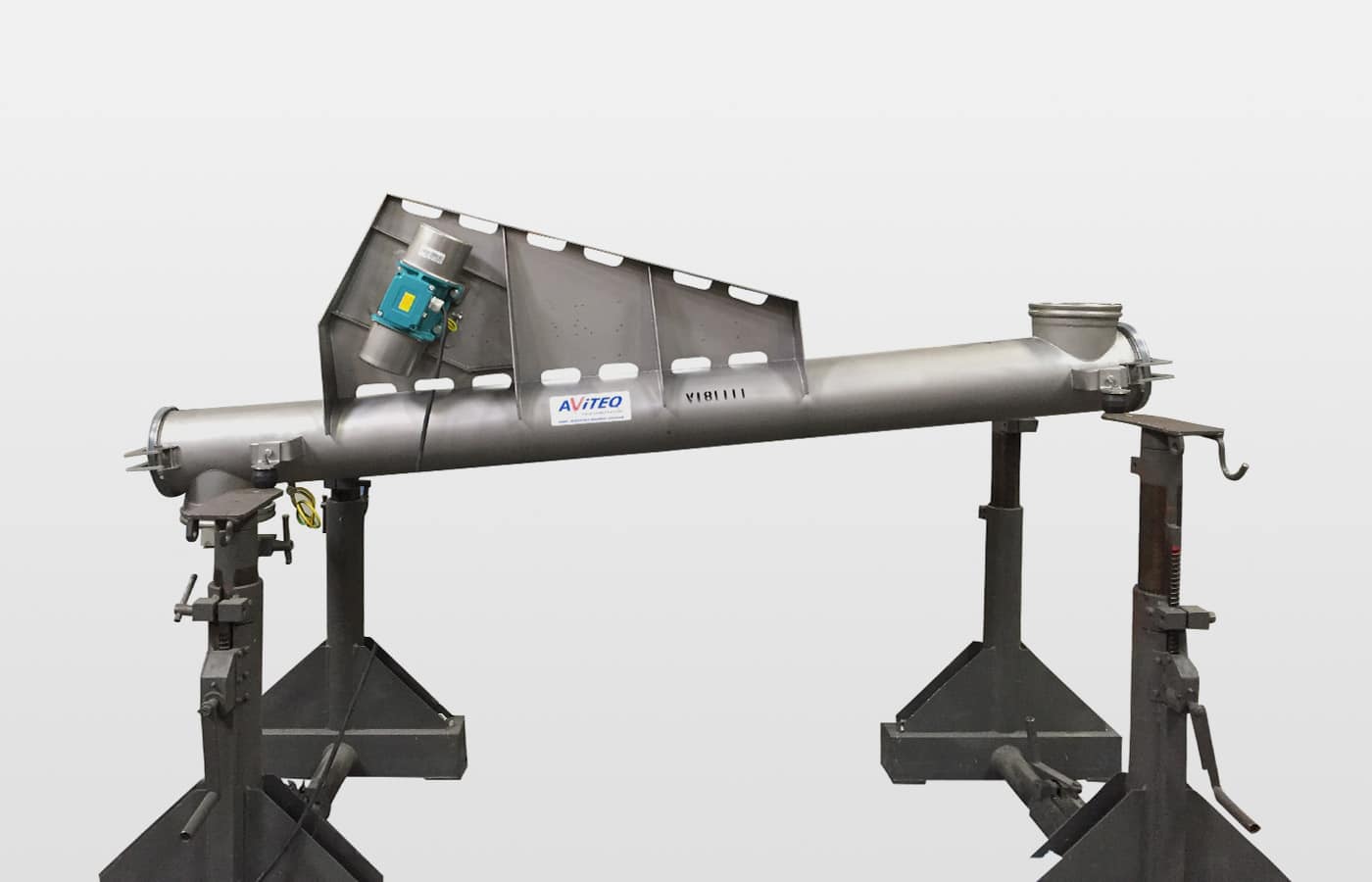
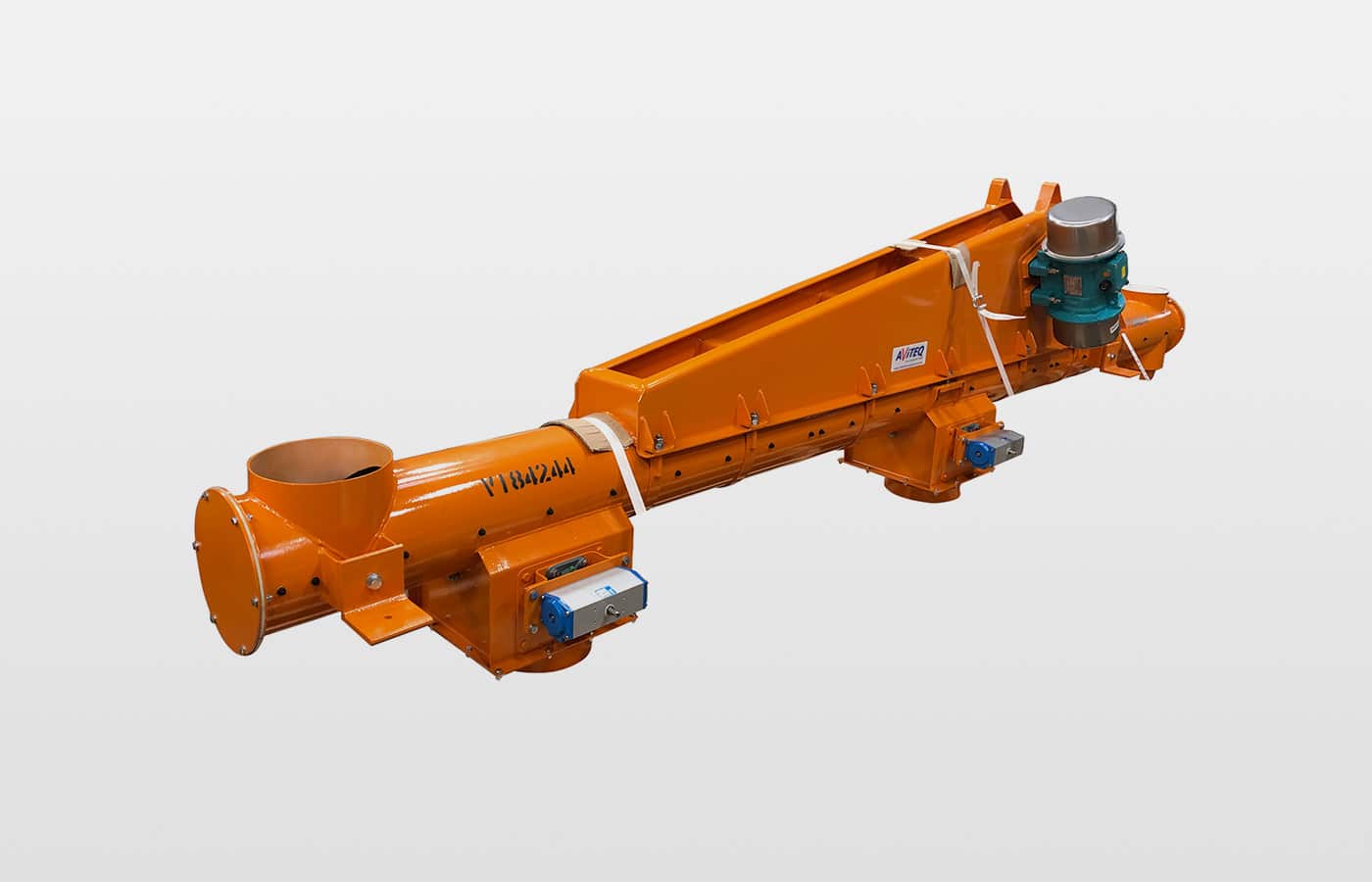
A pipe conveyor is a closed conveying system designed to transport bulk material. Unlike a conveyor belt or an open trough, the material remains inside the pipe during transport. The drive causes the pipe to vibrate, which moves the material in the direction of conveyance.
The conveyor pipe is particularly well-suited for transporting bulk materials along a closed conveying route. Depending on the requirements, it can handle not only conveying but also the controlled feeding or metering of the material.
With the various drive options, you can adjust the conveying speed and intensity to suit your specific goals and requirements—which is possible in both directions thanks to the reverse operation. Reversing technology reduces costs for flap systems, facilitates alternating dosing and packaging, and minimizes cleaning efforts. Our magnetic vibrators play a crucial role in this process, as they enable precise dosing and a wide range of process operations.
- Wide range of applications
- Dustproof
- Food-safe versions
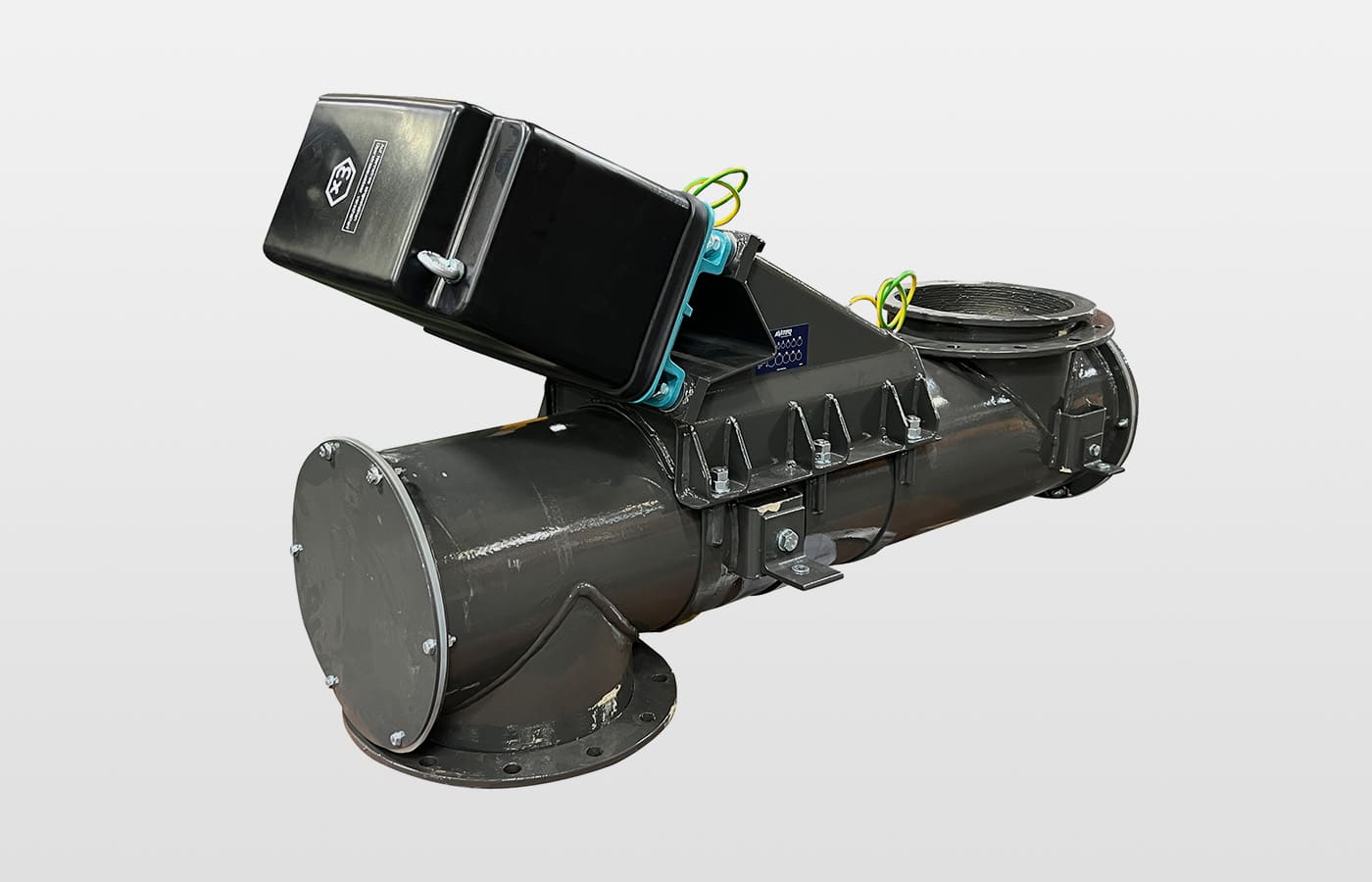
- Drives using magnetic vibrator(s) or unbalance motor(s) (ATEX version)
- Series connection
- Multiple drives
- Reverse operation
- Separate replacement of tubular body or drive crossbar (clamp variant)
- Normal or stainless steel
Design and Drive System of a Conveyor Pipe
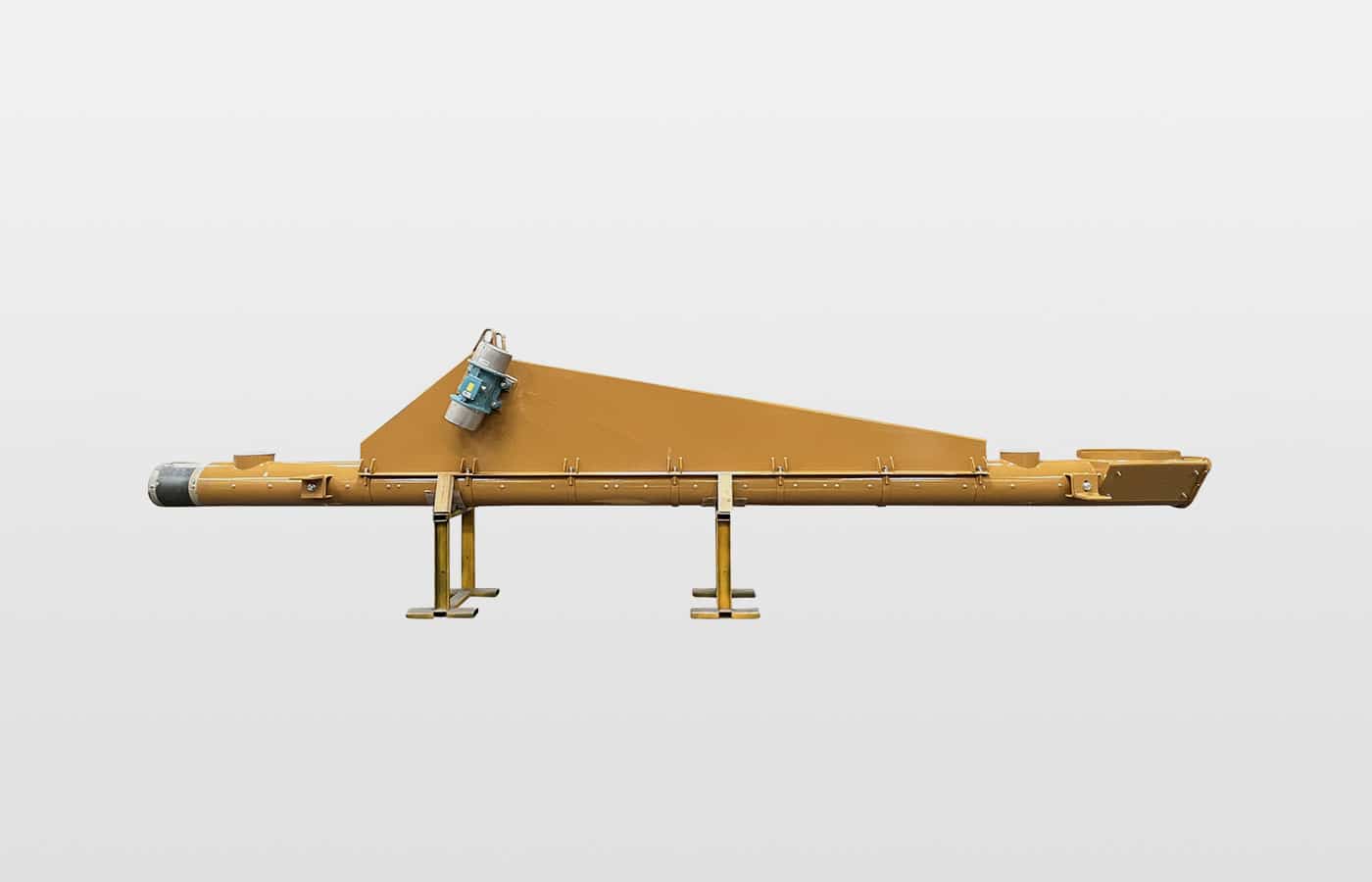
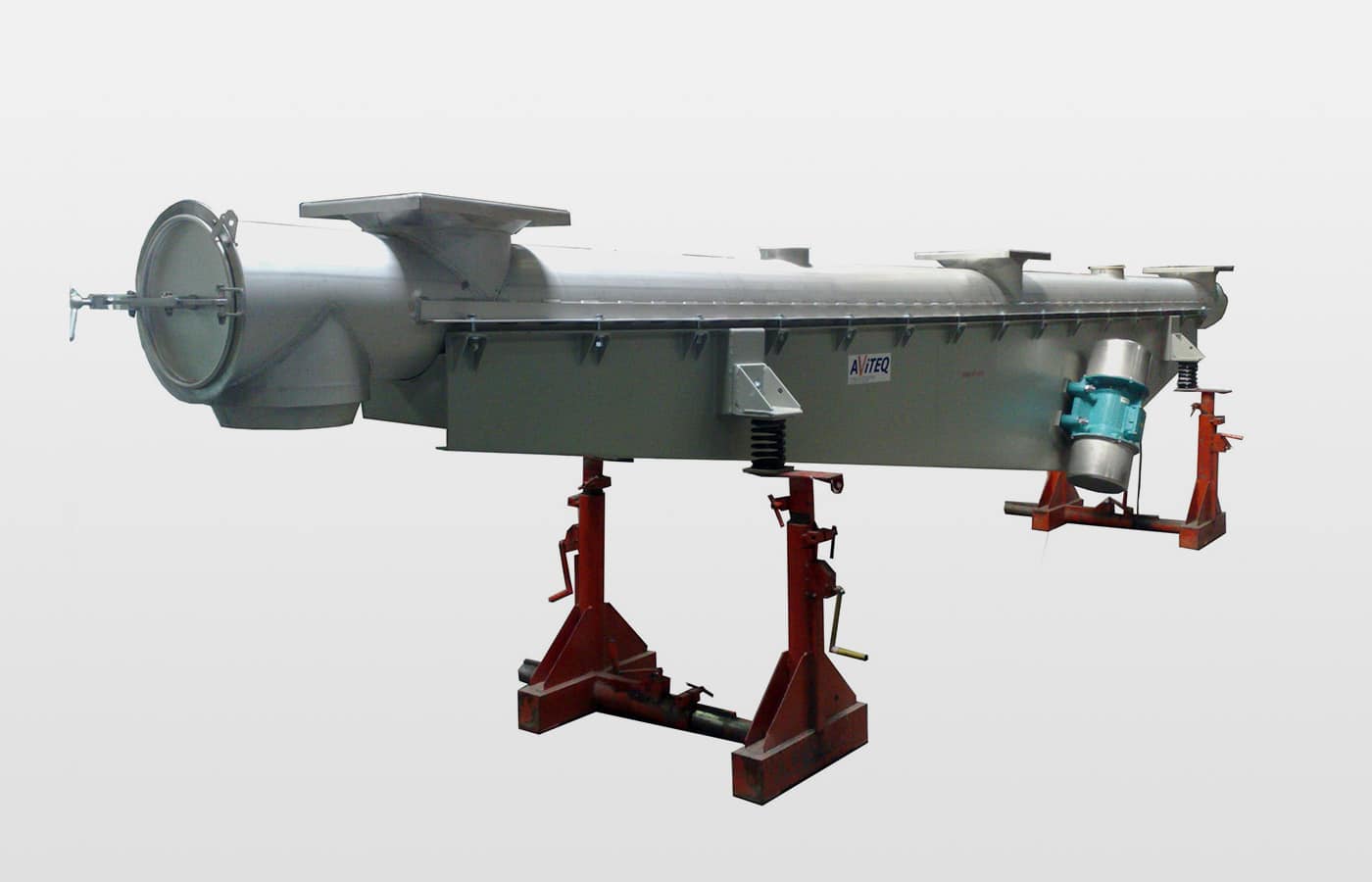
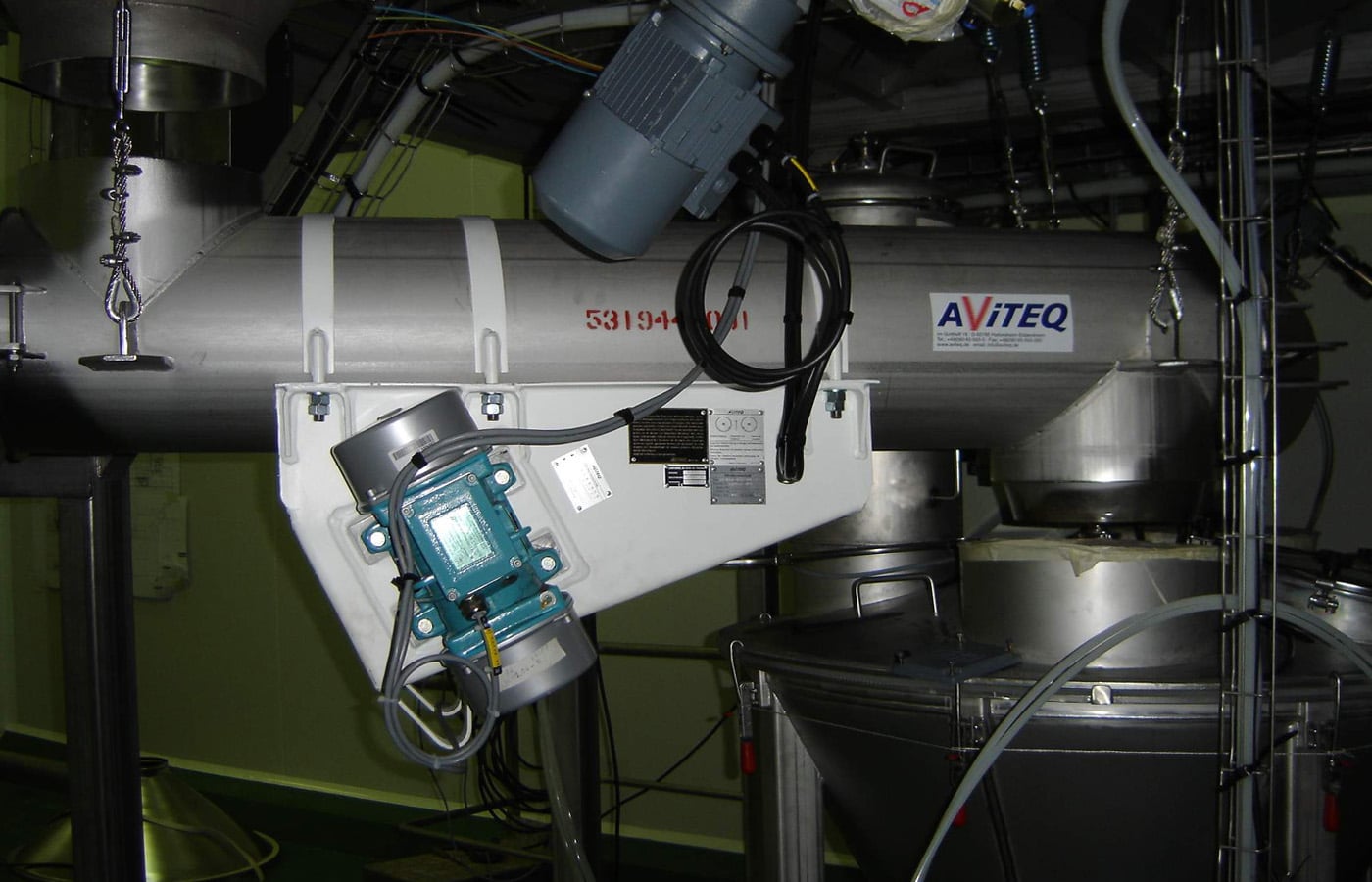
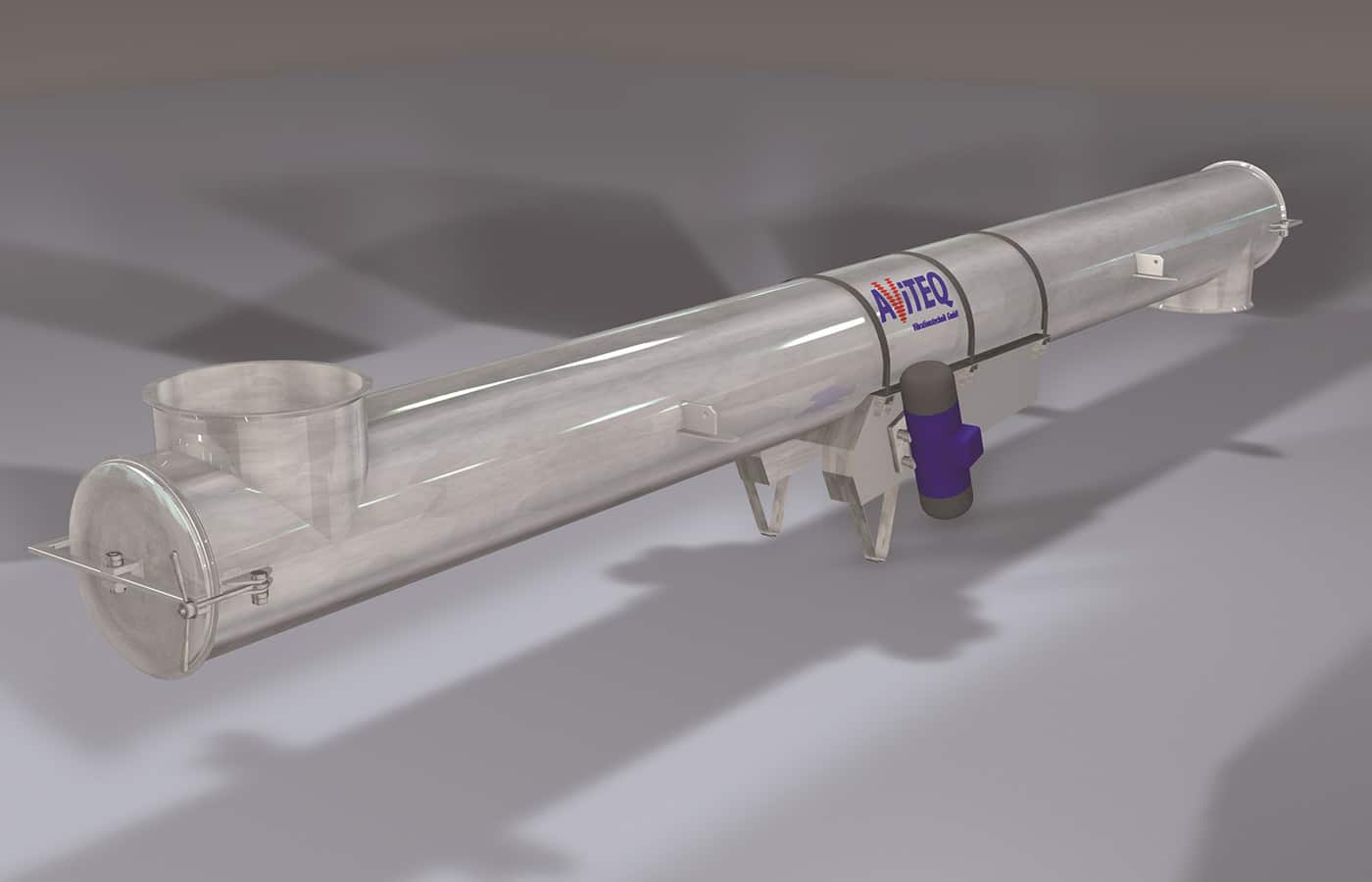
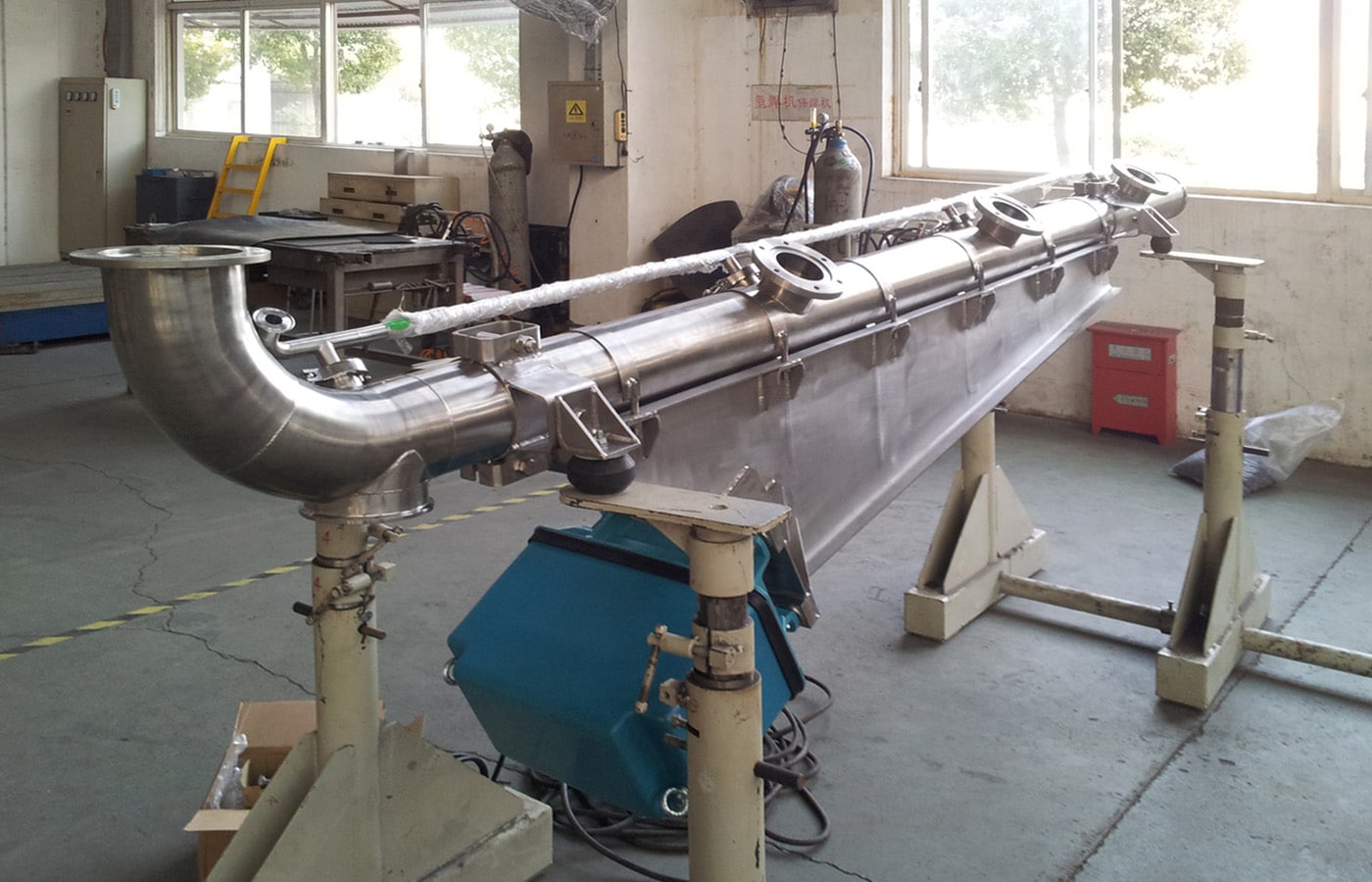
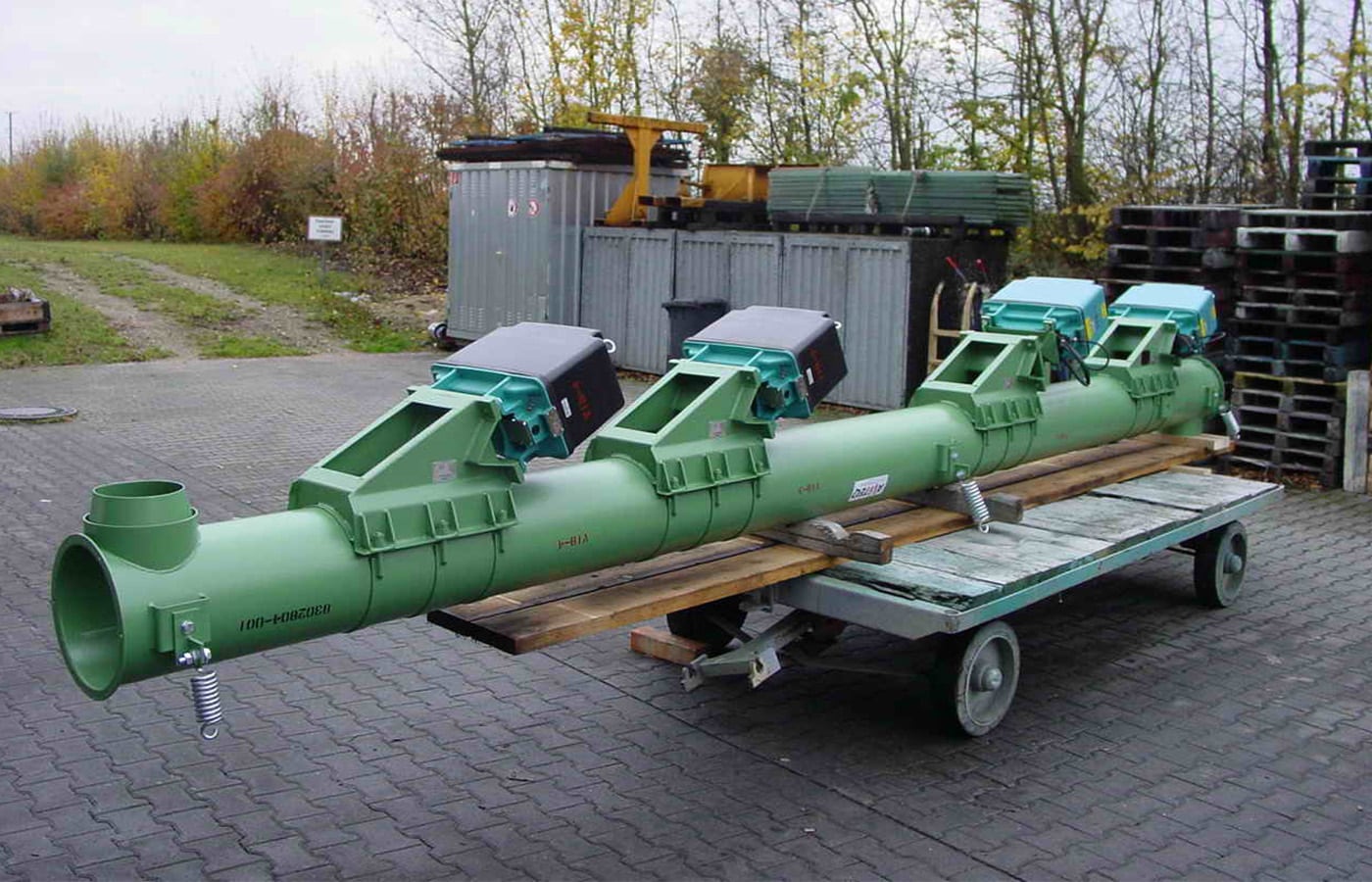
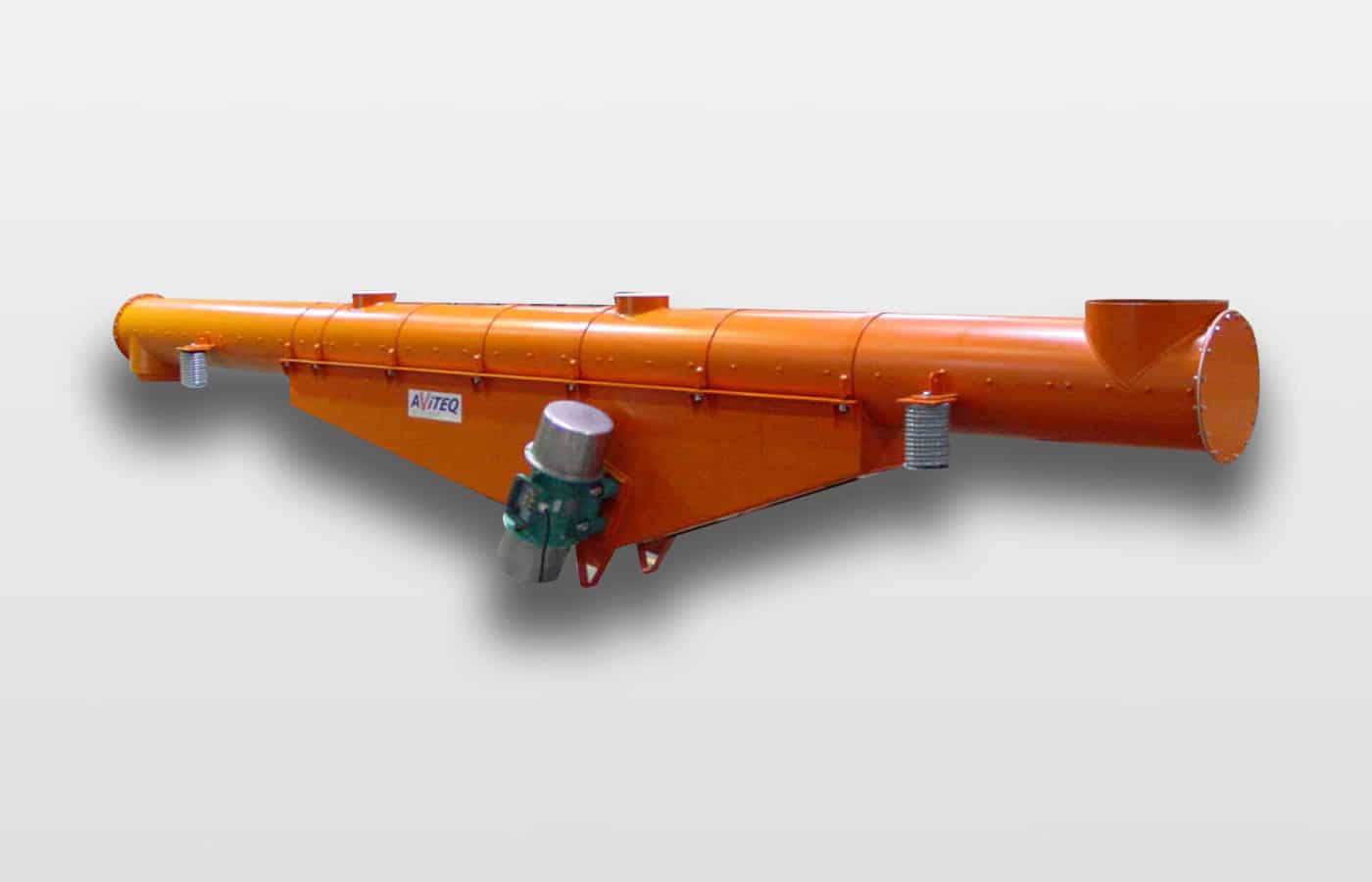
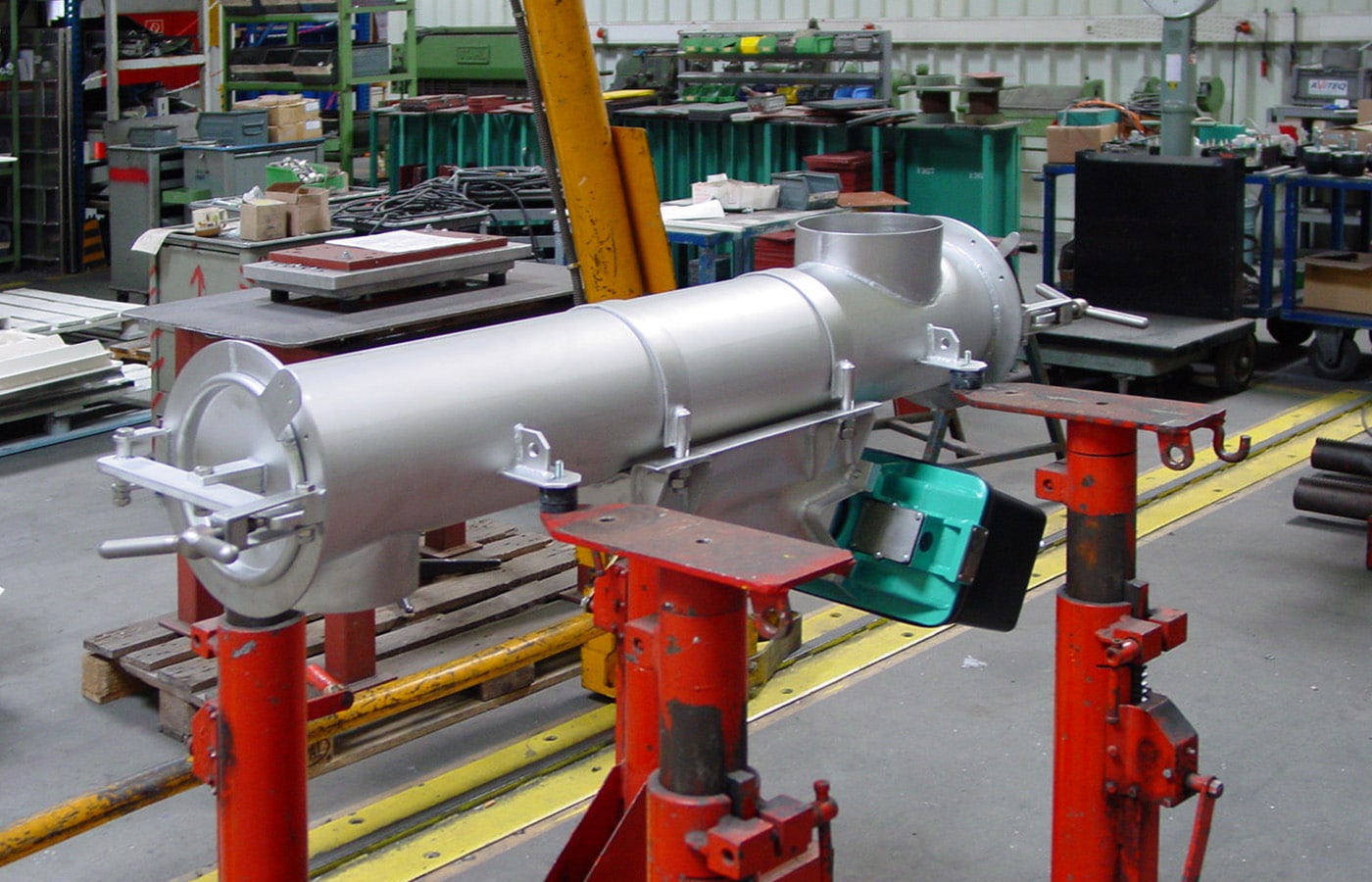
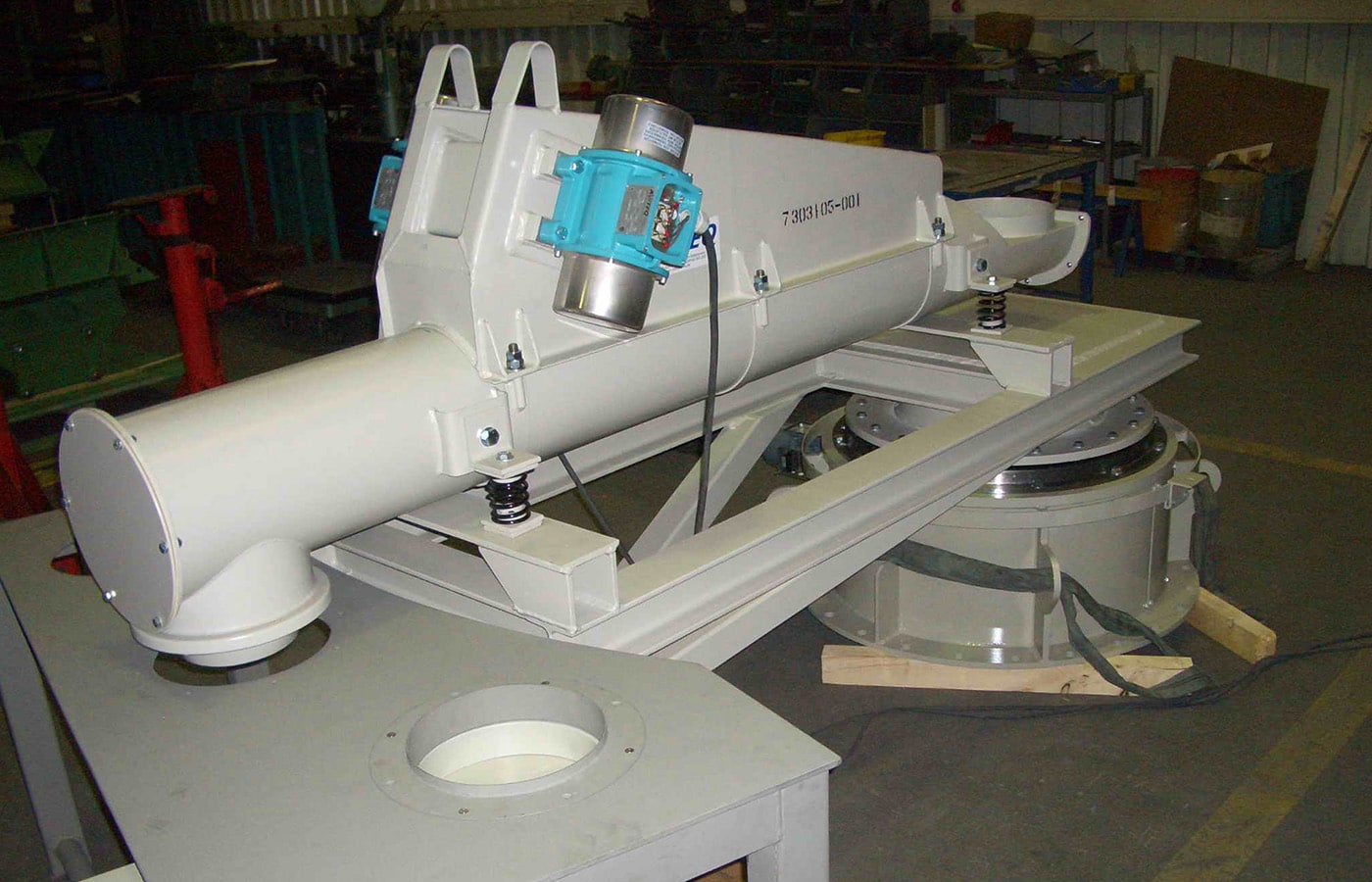
An AViTEQ conveyor pipe essentially consists of the pipe body, a drive crossbeam, the drive unit, the inlet and outlet, and flexible support elements. Flexible seals ensure a sealed connection to the adjacent system.
Magnetic vibrators or unbalanced motors are used for the drive. The appropriate solution depends on the material being conveyed, the desired conveying capacity, control requirements, and the system design. For longer conveying distances, multiple conveying pipes can be combined.
-
Simple installation and low maintenance
-
Vibratory tubular feeders with detachable drive crossbar for easy cleaning and maintenance
-
Several drive options
-
Optionally welded or detachable using pipe clamps
-
Inlet/outlet supports for additional stability
-
Flexible seals against material loss, dust and emissions
When is a vibrating conveyor tube a suitable solution?
A conveyor pipe is an ideal solution when bulk material needs to be transported in a sealed and controlled manner. The pipe design protects the material being conveyed from external influences and helps limit dust emissions. Hygienic models are suitable for applications with heightened cleanliness requirements.
A feed tube can be particularly advantageous when
- Dust-tight transport is required
- the material being conveyed must be protected from contamination
- a sealed design must be integrated into the system
- The conveyor speed or material feed rate should be adjusted
- a reverse function is required for alternating conveying directions
- an easy-to-clean or food-safe design is required
Actual suitability always depends on the properties of the material being conveyed and the operating conditions. These include, among other things, particle size, moisture content, bulk density, temperature, and abrasiveness.
Which model is right for your conveying application?
Conveyor pipes are tailored to the specific application. In addition to the conveying capacity, the design is determined by the material being conveyed, the desired conveying distance, and the installation conditions.
Drive, Material, and Design
| Selection criterion | Possible design | What are the key factors to consider when making a selection? |
| Drive | Magnetic vibrator or unbalanced motor | Required Flow Rate : Control Capabilities and System Design |
| Material | Carbon steel or stainless steel | Corrosion Stress Material Handled and Hygiene Requirements |
| Drive Crossbeam | Welded or detachable , secured with pipe clamps | Cleaning Access, Maintenance, and Replaceability |
| Conveyor line | A single pipe or multiple pipes combined | Required length and available installation dimensions |
| Funding Area | Standard or Reversible Operation | Process Flow and Desired Material Distribution |
| Connections | 's inlet and outlet in the appropriate design | Interfaces to the existing system |
FAQ: Conveyor Pipes
A vibrating conveyor pipe is particularly advantageous when transporting sensitive, abrasive, or dusty bulk materials. Unlike a screw conveyor, there are no rotating components in the product flow. This results in less wear, lower maintenance costs, and significantly reduced product destruction.
In addition, the system is particularly suitable for dust-free, closed conveying processes and for applications in ATEX zones. Conveying capacities from a few kg/h up to several t/h can be achieved, depending on the design.
For a reliable assessment, information on bulk material, conveying capacity, and conveying distance is required.
Vibratory conveyor pipes are suitable for powders, granulates, bulk materials with varying grain sizes, and abrasive or temperature-sensitive materials. Typical applications can be found in the chemical, food, recycling, and plastics industries.
Vibration-based conveying also offers advantages for sensitive products where breakage must be avoided, as there is no mechanical compaction.
A project-specific design takes into account bulk density, grain size, moisture content, and flow properties.
The enclosed design is suitable for low-dust or dust-free conveying systems. However, the actual level of dust tightness depends on pipe connections, seals, the inlet and outlet, and the process conditions. Therefore, the pipe design alone cannot be relied upon as proof of guaranteed dust tightness.
The simple design facilitates installation, cleaning, and maintenance. Depending on the model, the drive crossbeam is either welded in place or secured with removable pipe clamps. The removable version allows for the separate replacement of the pipe body and the drive crossbeam and improves access. The inlet and outlet can be adapted to the adjacent process steps and cleaning requirements. Connection and installation planning is tailored to the on-site conditions.

The easiest way to submit a request

PRODUCT CONFIGURATOR
Take the opportunity to easily configure your project and the products it contains and send it to us. Can be saved and called up at any time.

Continuous material flows: Precise dosing guaranteed
Our drives ensure a continuous flow of bulk solids and loosen bulk solids, powders and granulates for a problem-free conveying process without clumping or bridging. They also optimize the dosing accuracy for a controlled material feed, which is important in the food or chemical industry, for example.

Unbalance motor
Find out more about our unbalance motors here

Magnetic vibrator
Find out more about our magnetic vibrators here


Horizontal conveying
Discover all products in the "Horizontal conveying" range.



Our download area
Our brochures and further information are available for download as PDF files. Operating instructions are available on request.
